Torsion Springs vs. Extension Springs: What’s the Difference?
By Sky Houck, Owner — AZ Garage Door Repair · Updated May 5, 2026
Garage door springs are the most critical mechanical component in the system. They counterbalance the weight of the door — which ranges from 100 to over 400 pounds — making it possible for a relatively small opener motor (or one person’s arm strength) to lift the door.
Why Spring Type Matters
Garage door springs are the most critical mechanical component in the system. They counterbalance the weight of the door — which ranges from 100 to over 400 pounds — making it possible for a relatively small opener motor (or one person’s arm strength) to lift the door. Understanding which type of spring your door uses affects how you maintain it, what to expect when it fails, and what options you have for replacement or upgrade.
How Garage Door Springs Work
Both spring types serve the same function — storing mechanical energy when the door closes and releasing it when the door opens — but they achieve this through different mechanisms:
- Torsion springs store energy through torsion (twisting/torque).
- Extension springs store energy through extension (stretching).
Torsion Springs
Where They’re Located
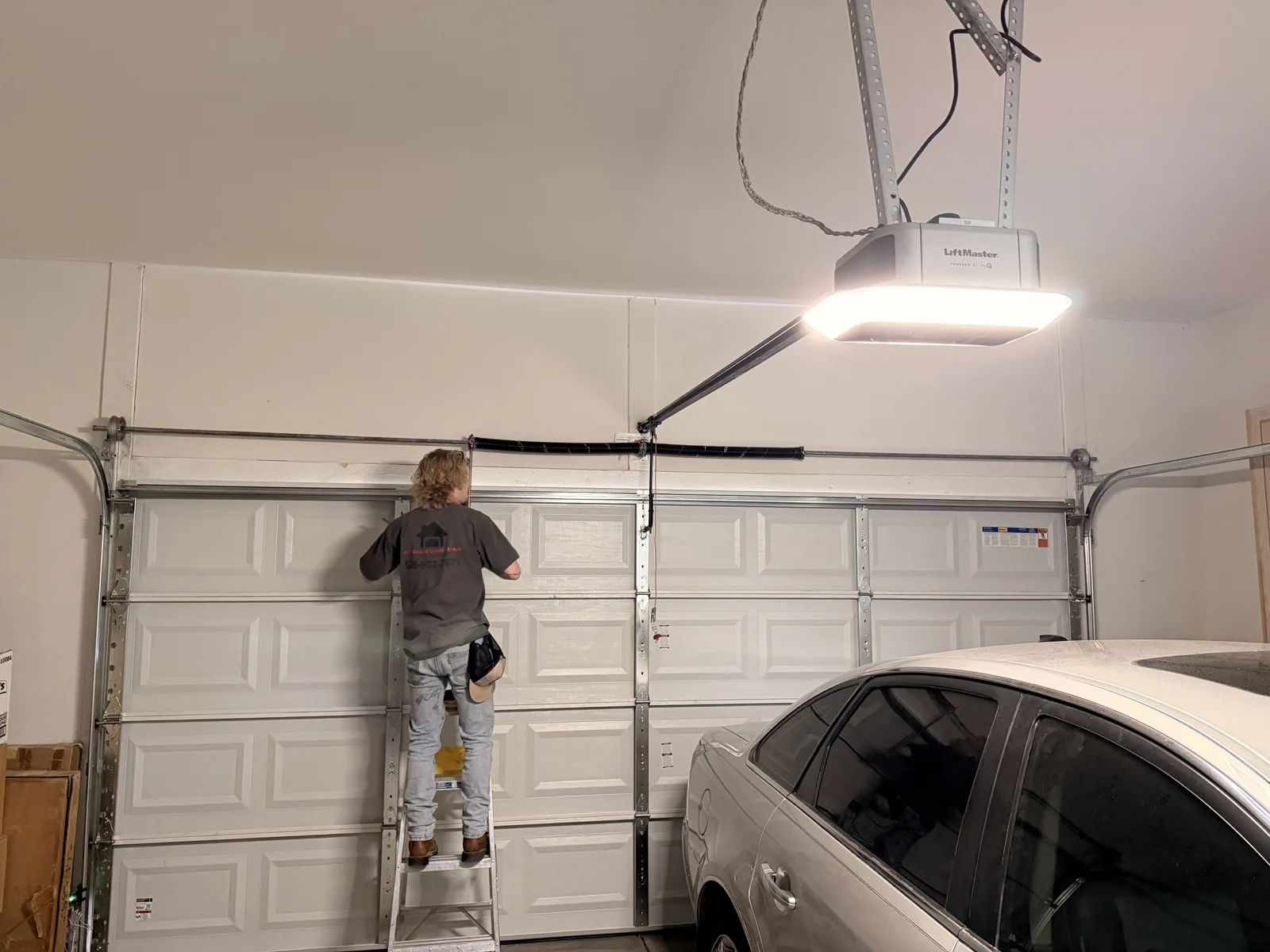
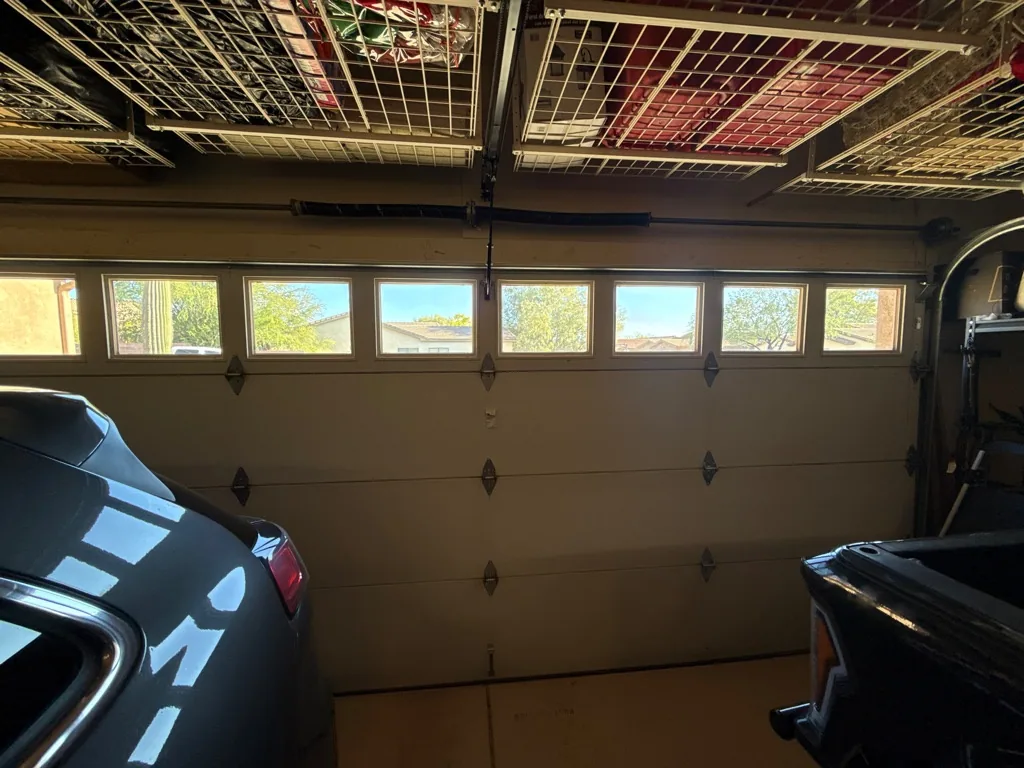
Torsion springs are mounted horizontally on a metal shaft directly above the garage door opening. In a standard residential setup, one or two torsion springs are centered above the door. Each spring is attached to a cable drum at the far end of the shaft; lift cables run from each drum down to the bottom corners of the door.
How They Work
When the door is lowered, the spring is wound (twisted) by the cable drums as the cable unspools. The spring stores this rotational energy. When the door is raised, the wound spring unwinds, rotating the shaft and drums, which wind the cables and lift the door.
Advantages of Torsion Springs
- Longer lifespan: Standard torsion springs are rated for 10,000 cycles; high-cycle versions for 25,000–100,000 cycles.
- Better balance: The central mounting and cable drum system provides more even lifting across the full width of the door, reducing lateral stress and wear.
- Safer failure mode: When a torsion spring breaks, the spring remains on its shaft. While the door becomes inoperable, the spring doesn’t become a projectile.
- Compact: All hardware is above the door, not along the horizontal ceiling tracks, leaving more usable ceiling space.
- Smoother operation: Torsion spring systems generally operate more smoothly and quietly than extension spring systems.
Disadvantages
- Higher repair cost: Torsion spring replacement requires specialized winding bars and expertise. Professional replacement of a torsion spring is more expensive than extension spring replacement.
- Dangerous DIY: Torsion springs are under extreme torque. Attempting DIY replacement without proper tools and training is one of the most dangerous home repair tasks a homeowner can attempt.
Extension Springs Need Same-Day Garage Door Service in Tucson?Written estimates · No after-hours fees · 2-year labor warranty · Bonded & Insured insured. 📞 Call NowBook Online Same-day serviceUpfront written pricingHighly-trained technicians
Where They’re Located
Extension springs are mounted on both sides of the door, running horizontally along the ceiling tracks parallel to the door’s horizontal sections. One spring on each side. They’re typically found on older residential doors, lighter single-car doors, and doors with low clearance above the opening.
How They Work
Extension springs connect between the door track and the door’s bottom bracket via a system of pulleys and cables. As the door closes, the springs stretch (extend). When the door opens, the springs contract and pull the door upward through the pulley system.
Advantages of Extension Springs
- Lower replacement cost: Extension springs are simpler and less expensive to replace than torsion springs.
- Works with low-clearance installations: In garages with limited headroom above the door, extension springs may be required when a torsion bar assembly won’t fit.
- More visible: The springs are easily visible along the ceiling tracks, making it easy to inspect their condition.
Disadvantages
- Shorter lifespan: Extension springs are typically rated for 7,000–10,000 cycles — fewer than standard torsion springs, and significantly fewer than high-cycle torsion options.
- Dangerous failure mode: When an extension spring breaks, it can snap violently and become a projectile capable of serious damage. This is why extension spring systems require safety cables — metal cables that run through the center of each spring. A missing or absent safety cable is a serious safety hazard.
- Less balanced lifting: Extension spring systems provide less even lifting force than torsion systems, which can contribute to uneven wear on rollers, hinges, and the opener.
- More complex pulley system: Extension spring systems include more components (pulleys, cables, safety cables) — more parts that can wear or fail.
Safety Cables: Non-Negotiable for Extension Springs
Every extension spring should have a safety cable running through its center. If you have extension springs and no safety cables, this is a hazard that should be corrected immediately. Safety cables are inexpensive ($260 – $364 for a pair) and straightforward to install.
Which Is Better: Torsion or Extension?
For most modern residential applications, torsion springs are the superior choice:
- Longer service life
- Safer failure mode
- Smoother door operation
- Better weight distribution and door balance
Extension springs remain appropriate for older doors designed around them, low-clearance situations, and budget-focused repairs where the door itself is nearing end-of-life anyway.
If you have extension springs and are replacing the door or doing significant mechanical work, upgrading to a torsion spring system is worth the added cost for the performance and longevity benefits.
Spring Replacement in Tucson
AZ Garage Door Repair replaces both torsion and extension springs throughout the Tucson metro area. We carry standard and high-cycle torsion springs for all residential door sizes and weights. Call (520) 201-1413 for same-day service.
Related Services & Resources
- garage door repair services in Tucson
- emergency garage door repair
- Why DIY Garage Door Spring Repair Is Dangerous: What Every Homeowner Should Know
- How Long Do Garage Door Springs Last? Lifespan by Spring Type
Ready to fix it?
Same-day service · Written estimates · No after-hours fees · 2-year labor warranty
📞 Call (520) 201-1413 Book Online 📞 Call NowBook EstimateRelated Services
About the author: Sky Houck
Sky is the owner of AZ Garage Door Repair, a family-owned Tucson garage door company rated 5.0 stars across 100+ Google reviews. He still runs service calls across the Tucson metro, and every guide on this site is based on real jobs his crew handles every week.
Frequently Asked Questions
Common questions answered by AZ Garage Door Repair.
What does a garage door spring repair cost in Tucson?
AZ Garage Door Repair charges from $335 per spring plus labor. Final pricing depends on the spring tier you choose and is quoted up front before any work begins.
How fast can AZ Garage Door Repair come out?
Same-day service across Tucson and surrounding metro. Central Tucson calls reached in 60-90 minutes; Oro Valley, Marana, Foothills 90-120 minutes. 24/7 emergency dispatch — nights, weekends, and holidays included.
Do you charge for estimates?
Yes — AZ Garage Door Repair on-site estimates come with a trip fee credited toward your repair. We come out, diagnose in person, and provide a written, fixed-price quote with zero obligation.
Is AZ Garage Door Repair bonded and insured?
AZ Garage Door Repair is bonded & insured with Bonded & Insured on every job. Our highly-trained technicians average 8+ years of field experience.
What brands does AZ Garage Door Repair install and service?
AZ Garage Door Repair is a Clopay supplier and LiftMaster supplier. We service all major brands including Genie, Wayne Dalton, Amarr, Chamberlain, Craftsman, and CHI.
What areas does AZ Garage Door Repair cover?
AZ Garage Door Repair serves Tucson, Oro Valley, Marana, Casas Adobes, Sahuarita, Catalina Foothills, Vail, SaddleBrooke, Tanque Verde, Rincon Valley, and the entire Pima County metro.
Leave a Reply Cancel reply
Recent work across Tucson
Need garage door help in Tucson?
Same-day service across the Tucson metro. Bonded, insured, and 100+ five-star reviews. Get your estimate today.