How to Prepare Your Garage Door for Arizona’s Extreme Summer Heat
By Sky Houck, Owner — AZ Garage Door Repair · Updated May 5, 2026
Arizona’s summer climate is an engineering challenge for every outdoor mechanical system. From May through September, outdoor temperatures regularly exceed 100°F, with peaks above 110°F occurring annually in the Tucson area.
What Arizona Heat Does to Garage Doors
Arizona’s summer climate is an engineering challenge for every outdoor mechanical system. From May through September, outdoor temperatures regularly exceed 100°F, with peaks above 110°F occurring annually in the Tucson area. Inside an uninsulated garage, temperatures can reach 130–150°F. Add in intense UV radiation and the humidity spikes of monsoon season, and you have a uniquely demanding environment for garage door components.
Here’s what extreme heat specifically does to garage door components:
- Springs: Metal expands in heat. Torsion springs that are correctly sized in cooler weather may experience slight changes in tension characteristics under extreme heat, affecting door balance.
- Lubricants: Heat causes lubricants to thin and eventually evaporate or vaporize. Grease that would last 6 months in a moderate climate may need replacement every 3–4 months in Arizona.
- Rubber seals: UV radiation and heat accelerate rubber oxidation, causing seals to crack, harden, and lose their sealing ability. Standard rubber seals that last 8–10 years elsewhere may last 3–5 years in Tucson.
- Opener electronics: Heat is the enemy of electronic components. Opener circuit boards, capacitors, and motor windings are all stressed by operating temperatures well above their design range.
- Panel materials: Steel and aluminum panels expand in heat. In extreme cases, thermal expansion can cause panels to bow or cause the door to bind in its tracks.
- Weatherstripping adhesive: Adhesive-backed weatherstripping can soften and separate from the door frame in extreme heat.
Pre-Summer Inspection Checklist
Perform this inspection each April or early May before peak heat arrives:
- Check spring condition: Look for rust, uneven coil spacing, or any visible gap indicating a fracture. A compromised spring is more likely to fail during summer’s additional thermal stress.
- Test door balance: Disconnect the opener and manually lift the door to waist height. It should hold in place. If it falls or rises, spring adjustment is needed before summer loads hit.
- Inspect all rubber seals: Check the bottom seal, side seals, and top seal for cracking, brittleness, or compression loss. Replace any that show deterioration.
- Verify opener ventilation: Many opener motor units have vents on the housing. Check that these aren’t blocked by storage items, dust, or insulation materials.
- Check opener battery backup: Heat degrades batteries. Test the backup by unplugging the opener and cycling the door. Replace backup batteries every 1–2 years, ideally before summer.
- Inspect panel condition: Look for any warping, bowing, or separation at the panel seams that might indicate the door is already experiencing thermal stress.
Summer Lubrication: More Frequent, Right Product
Lubrication needs to happen more often in Arizona summers. Here’s the specific approach:
- Lubricate in May before peak heat (not in the middle of summer when lubricant will immediately thin).
- Use high-temperature lithium grease or a product specifically formulated for use in hot climates. Standard white lithium grease works but may need more frequent application.
- Apply moderately: Heavy application in summer actually attracts more dust as lubricant thins, creating an abrasive paste. Use less, more frequently.
- Check in mid-summer (July): Re-apply if the door sounds dry or operation feels rough.
Garage Door Insulation: The Biggest Summer Upgrade
Need Same-Day Garage Door Service in Tucson?
Written estimates · No after-hours fees · 2-year labor warranty · Bonded & Insured insured.
📞 Call NowBook OnlineIf you have an uninsulated garage door, replacing it with an R-12 or higher insulated door is the single most impactful improvement for summer comfort and energy efficiency. An insulated door:
- Can reduce interior garage temperature by 10–25°F on peak summer days
- Reduces heat transfer through the garage wall into adjacent living spaces
- Reduces HVAC load and energy costs
- Makes the garage usable as a workspace even in summer
If full replacement isn’t in the budget, a retrofit insulation kit ($50–$200) provides partial benefit at lower cost, though it adds weight that may require spring rebalancing.
Protecting Opener Electronics from Heat
- Consider adding a garage ventilation fan: A small exhaust fan pulls hot air out of the garage, reducing peak temperatures by 10–20°F. This directly extends opener lifespan.
- Use the right bulbs: Replace incandescent bulbs in the opener with LED bulbs rated for enclosed fixtures. Incandescents generate substantial heat inside the opener housing.
- Don’t block the opener’s heat vents: The motor unit needs airflow. Keep the area around it clear.
- Consider replacing a very old opener before summer: Openers over 15 years old running in extreme heat are prime candidates for failure during peak summer months. Summer heat accelerates capacitor and motor winding failures.
Door Color and Solar Heat Gain
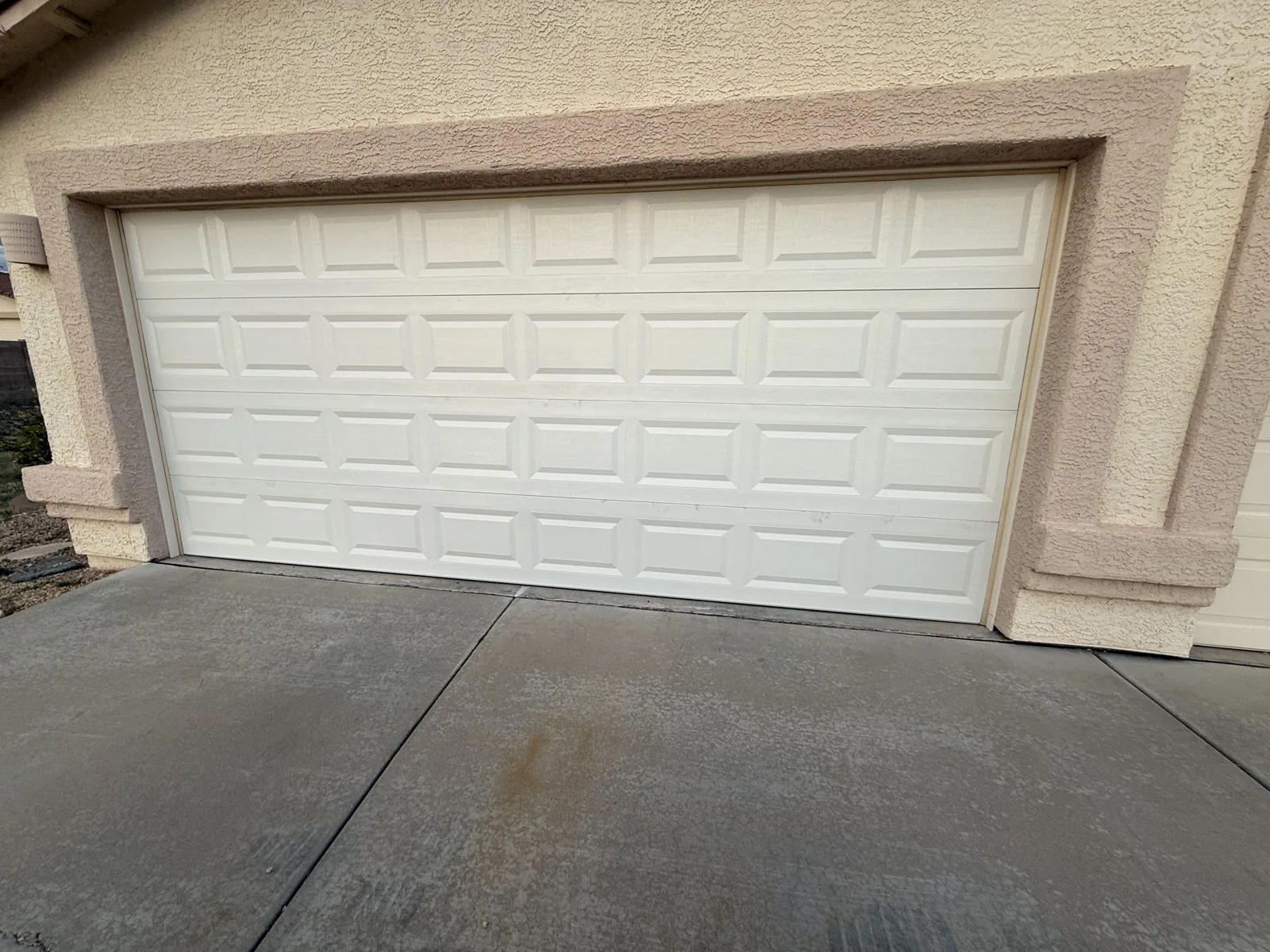
Dark-colored garage doors absorb significantly more solar radiation than light-colored doors. On a south or west-facing garage, a black or dark brown door can reach surface temperatures of 150°F+, dramatically increasing heat transfer into the garage.
If you’re selecting a new door, lighter colors (white, beige, light gray) are meaningfully cooler in Arizona. If you have a dark door that’s otherwise in good condition, some manufacturers offer reflective paint formulations or thermal coatings that can reduce surface temperature.
Monsoon Preparation
Tucson’s monsoon season (June–September) brings a second distinct challenge: sudden heavy rain and humidity after months of dry heat. Prepare by:
- Checking that the threshold seal and bottom seal prevent water intrusion
- Ensuring the garage floor drain (if present) is clear
- Checking that dust storms haven’t blocked the sensor lenses or deposited debris in the tracks
- Verifying the opener’s battery backup functions before the first major storm
Professional Summer Tune-Up
AZ Garage Door Repair offers a comprehensive summer tune-up that covers all the items in this guide — spring inspection, lubrication, balance testing, seal inspection, and opener service. This is especially valuable before you leave for summer travel. Call (520) 201-1413 to schedule.
Related Services & Resources
- garage door repair services in Tucson
- garage door maintenance services
- garage door insulation services
- Garage Door Battery Backup Systems: Why Every Tucson Home Needs One
- Why DIY Garage Door Spring Repair Is Dangerous: What Every Homeowner Should Know
Ready to fix it?
Same-day service · Written estimates · No after-hours fees · 2-year labor warranty
📞 Call (520) 201-1413 Book Online 📞 Call NowBook EstimateRelated Services
- Garage Door Spring Repair
- Garage Door Opener Repair
- Garage Door Maintenance
- Garage Door Weatherproofing
About the author: Sky Houck
Sky is the owner of AZ Garage Door Repair, a family-owned Tucson garage door company rated 5.0 stars across 100+ Google reviews. He still runs service calls across the Tucson metro, and every guide on this site is based on real jobs his crew handles every week.
Frequently Asked Questions
Common questions answered by AZ Garage Door Repair.
What does a garage door spring repair cost in Tucson?
AZ Garage Door Repair charges from $335 per spring plus labor. Final pricing depends on the spring tier you choose and is quoted up front before any work begins.
How fast can AZ Garage Door Repair come out?
Same-day service across Tucson and surrounding metro. Central Tucson calls reached in 60-90 minutes; Oro Valley, Marana, Foothills 90-120 minutes. 24/7 emergency dispatch — nights, weekends, and holidays included.
Do you charge for estimates?
Yes — AZ Garage Door Repair on-site estimates come with a trip fee credited toward your repair. We come out, diagnose in person, and provide a written, fixed-price quote with zero obligation.
Is AZ Garage Door Repair bonded and insured?
AZ Garage Door Repair is bonded & insured with Bonded & Insured on every job. Our highly-trained technicians average 8+ years of field experience.
What brands does AZ Garage Door Repair install and service?
AZ Garage Door Repair is a Clopay supplier and LiftMaster supplier. We service all major brands including Genie, Wayne Dalton, Amarr, Chamberlain, Craftsman, and CHI.
What areas does AZ Garage Door Repair cover?
AZ Garage Door Repair serves Tucson, Oro Valley, Marana, Casas Adobes, Sahuarita, Catalina Foothills, Vail, SaddleBrooke, Tanque Verde, Rincon Valley, and the entire Pima County metro.
Leave a Reply Cancel reply
Recent work across Tucson
Need garage door help in Tucson?
Same-day service across the Tucson metro. Bonded, insured, and 100+ five-star reviews. Get your estimate today.